

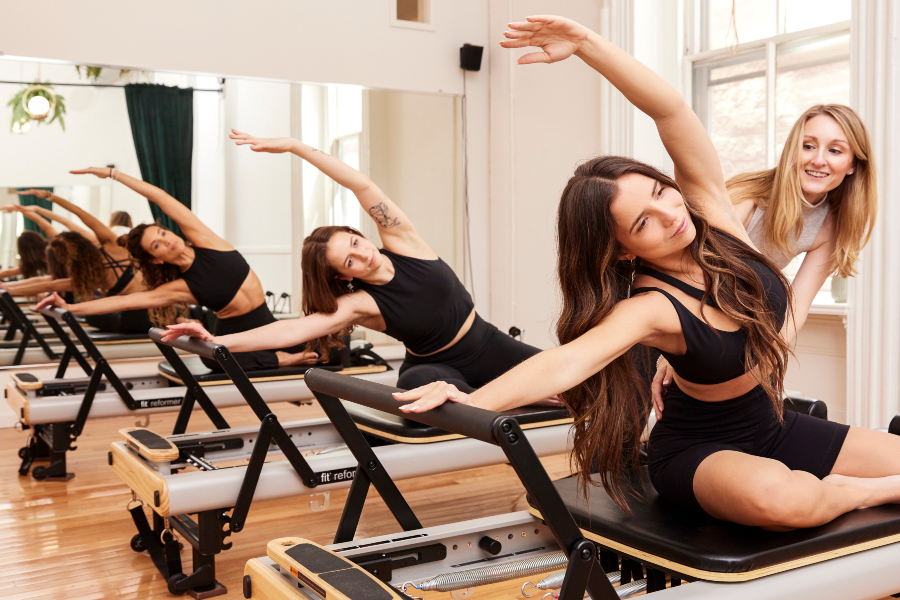
For those in Singapore looking to build a toned, lean body without developing excessive muscle bulk, pilates reformer training presents an ideal solution. Unlike weightlifting or high-impact cardio, reformer Pilates offers a scientifically structured workout that focuses on controlled movements, muscle endurance, and alignment. But what exactly is happening beneath the surface that makes this method so effective for sculpting and lengthening the body?
In this article, we delve into the biomechanics and physiology behind reformer Pilates and explain how it builds strength, tones muscles, and improves overall body composition—without making you bulky.
Understanding How Reformer Pilates Works on a Physiological Level
Reformer Pilates uses a system of springs and pulleys to create adjustable resistance against a gliding carriage. This allows users to perform a wide variety of exercises targeting different muscle groups through both concentric and eccentric movements (shortening and lengthening of muscles). Unlike traditional gym workouts, which often isolate muscles and rely heavily on momentum, reformer Pilates emphasises:
- Controlled repetition
- Slow tempo
- Breathwork
- Muscle isolation with full-body engagement
These principles train the slow-twitch muscle fibres, which are endurance-oriented and more responsible for long, lean muscle definition.
Why Reformer Pilates Tones Without Bulking
1. Activates Slow-Twitch Muscle Fibres
There are two primary types of muscle fibres:
- Fast-twitch fibres are activated during explosive movements (e.g., sprinting, heavy lifting) and grow in size rapidly.
- Slow-twitch fibres are used for stability, posture, and endurance-based movements. These fibres do not bulk easily but provide lasting tone and definition.
Reformer Pilates predominantly activates slow-twitch fibres through:
- Sustained isometric contractions
- High-repetition, low-resistance exercises
- Multi-joint movements
This training style leads to sculpted, functional strength without increasing muscle mass, making it a favourite among professionals, athletes, and those seeking aesthetic finesse in Singapore.
2. Trains Muscles Eccentrically
Eccentric contractions—when the muscle lengthens while under tension—are essential for toning. Reformer exercises often place emphasis on the “return phase” of a movement, which increases time under tension and results in microtears that rebuild leaner, stronger muscles.
This method also helps improve flexibility while strengthening, a dual effect that most conventional strength-training methods lack.
3. Core-Centric Functional Training
Reformer Pilates doesn’t isolate one area excessively. Instead, it engages the entire kinetic chain, especially the core. This includes the:
- Transverse abdominis
- Obliques
- Pelvic floor
- Multifidus (deep spine stabiliser)
By developing these muscles, your body becomes more stable and efficient, leading to improved posture and a naturally leaner appearance.
Singapore-Specific Appeal: Who’s Choosing Reformer Pilates?
In Singapore, where wellness is a growing priority among professionals, reformer Pilates has found a loyal following among:
- Corporate executives looking to counteract long desk hours
- Postnatal mothers aiming for abdominal recovery without high strain
- Actors and models who need muscle tone without mass
- Seniors and rehab clients preferring low-impact yet effective routines
Studios like Yoga Edition cater to these needs by offering reformer Pilates programmes that are adaptive, science-backed, and conducted by well-trained instructors who understand the demands of city life.
The Role of Neuromuscular Control in Toning
Reformer Pilates builds neuromuscular efficiency—your brain’s ability to communicate with your muscles efficiently. This is particularly evident in how:
- Movements are performed slowly and intentionally
- Core is engaged throughout the full range of motion
- Attention is placed on proper form, not speed
This precision improves muscle activation, meaning you get more out of each repetition. Over time, the improved neuromuscular coordination translates to better movement in daily life and sports.
Body Composition Benefits Backed by Research
Numerous studies support the benefits of reformer Pilates:
- A 2021 study published in the Journal of Sports Science & Medicine showed that 8 weeks of reformer Pilates significantly improved muscle tone, core stability, and posture in female participants without increasing muscle size.
- Another study in the Clinical Rehabilitation journal indicated improved functional mobility and lower body strength after 10 weeks of regular reformer sessions among older adults.
These outcomes confirm what regular practitioners already feel—lighter, tighter, and more energised bodies.
Common Exercises and Their Toning Benefits
Here are some staple reformer Pilates movements and how they target the body:
- Long Stretch Series – Builds upper body and core tone
- Leg Circles in Straps – Improves hip joint mobility while activating inner and outer thighs
- Kneeling Arm Series – Sculpts arms without adding bulk
- Scooter Exercise – Tones the glutes and legs unilaterally
- Mermaid Stretch – Elongates the torso and stretches obliques
Each exercise utilises spring tension that can be customised to suit individual levels, whether you’re a beginner or someone returning from injury.
Realistic Expectations and Transformation Timeline
Reformer Pilates isn’t about quick fixes. However, regular practice (2–3 times per week) can lead to visible and felt improvements in as little as 4–6 weeks:
- Tighter core and waistline
- Defined arms and legs
- Improved muscle tone without mass
- Better posture and flexibility
- Reduced bloating due to improved breathing and circulation
It’s a sustainable, long-term approach to fitness that aligns with the busy and wellness-conscious lifestyle of Singapore residents.
FAQs: Understanding Reformer Pilates from a Scientific Perspective
Q: Will I burn calories doing reformer Pilates even though it’s low impact?
Yes. While it’s not high-intensity, reformer Pilates burns calories through sustained muscle activation and improves metabolic function by increasing lean muscle mass.
Q: Can reformer Pilates replace traditional strength training?
It can complement or substitute traditional strength training depending on your goals. For functional strength and toning without bulk, it’s highly effective.
Q: Do I need to be flexible or coordinated to start?
Not at all. The reformer supports your movement and instructors guide you through it. Many people gain flexibility and coordination because of Pilates.
Q: How is reformer Pilates different from mat Pilates in muscle toning?
Reformer Pilates uses resistance and a wider variety of dynamic movements, making it more effective in targeting muscles from different angles.
Q: Is it suitable for men who want tone without looking overly muscular?
Yes. Many men in Singapore opt for reformer Pilates to achieve lean muscle, better mobility, and core strength without bulk.
If your fitness goal is a balanced, strong, and toned body without looking overly muscular, pilates reformer may be exactly what you need. Backed by science and proven by practice, it’s a sustainable, intelligent form of movement that aligns with the lifestyle aspirations of many in Singapore today.
